Doctorant en 2e année
Laboratoire des Sciences du Numérique de Nantes (LS2N)
Nantes Université
Nantes, France
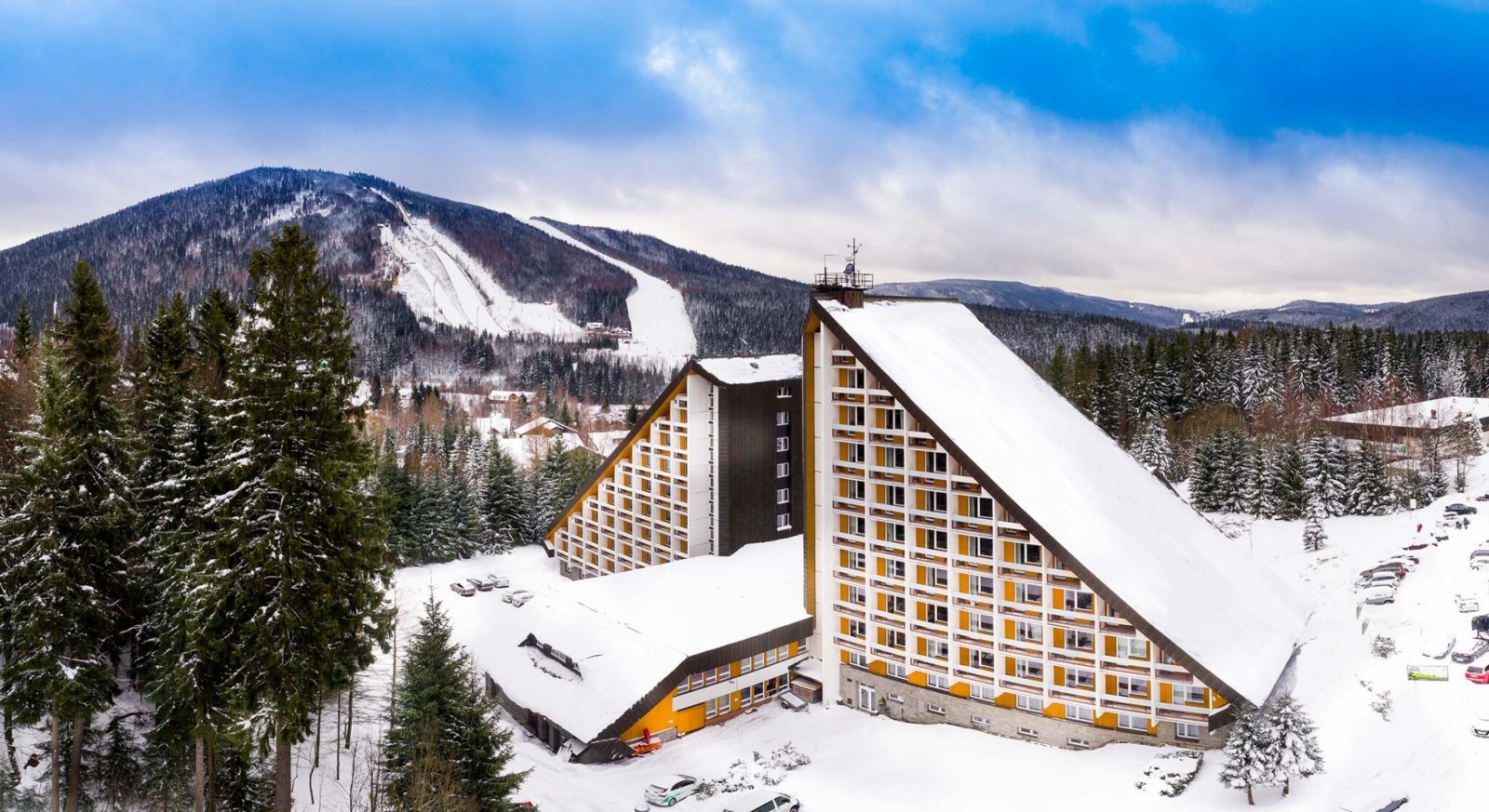
The 2026 EuBIC-MS Winter School was held in Harrachov, Czech Republic, from January 19th to 23rd, in one of Czechia’s most reknowned ski resort. This traditional Czech village provided the ideal setting for bringing together around 60 researchers, primarily at early career stages, to learn and share insights about the latest developments in computational biology for mass spectrometry.
The week kicked off with an educational day during which the fundamentals of advanced proteomics computational pipelines were demonstrated, using tools such as pyOpenMS, an open-source Python library for computational mass spectrometry, and resources like ProteomicsML, a platform for learning and creating machine learning models for proteomics.
The following days commenced with keynotes from inspiring speakers who showcased their latest research on diverse topics. Hannah Boekweg demonstrated that statistical comparison methods are often incorrectly applied to single-cell data, leading to potentially erroneous results, and explained how to adapt these methods for correct usage with single-cell data. Roman Bushuiev discussed the potential of deep learning approaches in mass spectrometry using DreaMS, a neural network trained on millions of samples to create molecular representations of tandem mass spectra, enabling the identification of diverse compounds in multiple metabolomics studies. Arthur Declercq demonstrated how challenges related to the size of databases used for new immunopeptides searches can be addressed using using AI-based rescoring tools, particularly by more accurately distinguishing correct from incorrect identifications. The keynote talks were followed by ample time for extensive discussions between speakers and audience members. In particular, Sam Wein’s keynote prompted thoughtful conversations about the future of data formats in mass spectrometry.
Most afternoons were dedicated to various workshops related to the morning keynotes. Max Burq demonstrated how Tesorai’s chat interface can be used for perform thorough proteomics analysis in a natural and straightforward manner. Matthias Anagho-Mattanovich showed how the ms_music package converts mzML files into musical sounds, offering a new artistic perspective on MS analyses. Armin Soleymaniniya, Jesse Angelis and Victor-George Giurcoiu presented how the Oktoberfest rescoring package and the koina platform enable the creation of complex analysis pipelines performing predictions and rescoring even with limited computational resources.
A panel discussion between the keynote speakers took place on the final morning, covering various subjects such as the future of approaches such as DIA or single-cell. This provided an opportunity to hear multiple experts’ perspectives, sometimes differing, which fostered engaging debates.