
Post doctoral researcher
UMR1064 – CR2TI, Nantes Université
Nantes, France
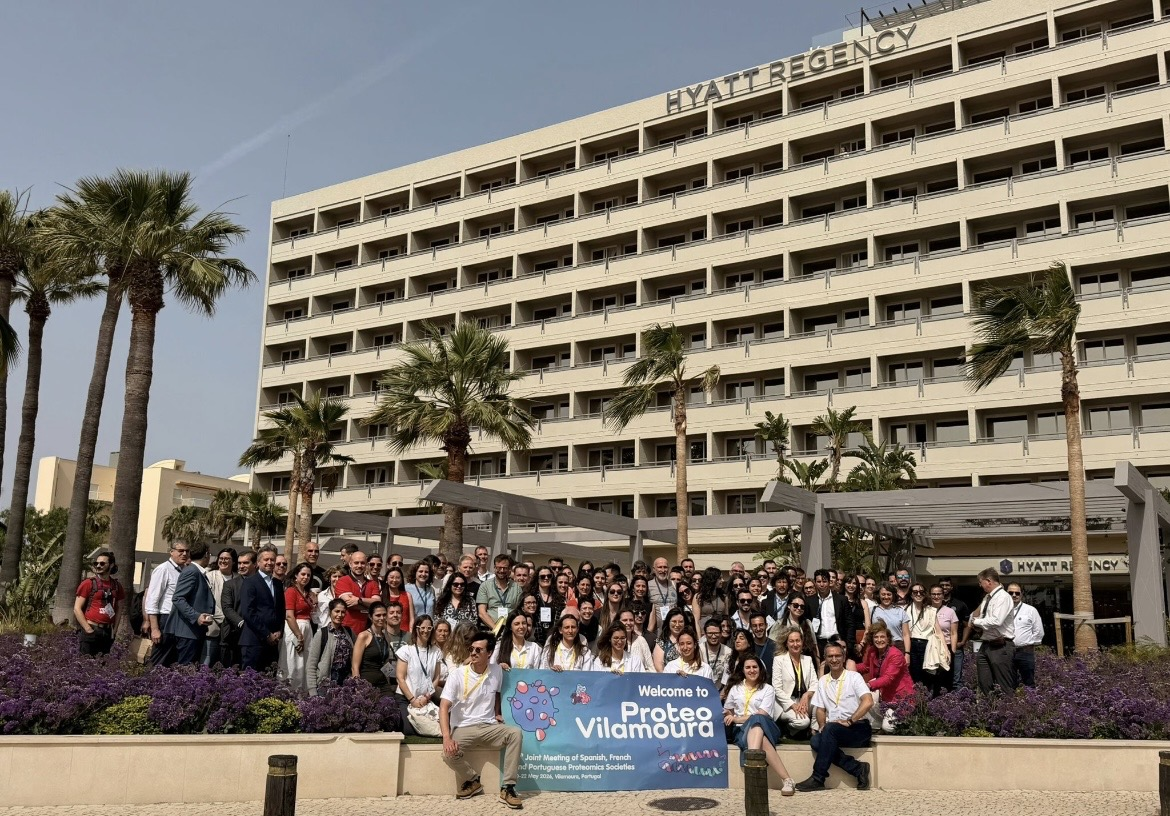
I participated in ProteoVilamoura 2026, the 6th Joint Meeting of the Portuguese, Spanish and French Proteomics Societies, held in Vilamoura, Portugal, from 20 to 22 May 2026. The meeting addressed diverse aspects of proteomics research, including clinical proteomics, single-cell proteomics, interactomics, cell signaling, post-translational modifications, proteomics in non-model organisms, as well as quantitative and computational proteomics. The conference featured an extensive scientific program, during which numerous research teams presented their latest findings through plenary lectures, short oral communications, flash talks, poster sessions, and a pre-congress training course on Python programming was proposed the first day.
Among the oral presentations, the plenary lecture delivered by Ana Martínez del Val was particularly insightful. In her presentation, « Decoding Protein Function: How Proteomics Reveals Post-Translational Control in Cell Signalling and Disease », she described optimization strategies to maximize phosphoproteomic depth and sensitivity while reducing the amount of peptide material required. More broadly, she highlighted how combining subcellular profiling with phosphoproteomics can reveal the spatial dynamics of kinase activity, and how multi-layered post-translational profiling can help dissect the mechanisms of proteostasis collapse resulting from proteasome inhibition.
Later in the conference, the Non-Model Organisms session was particularly intriguing, especially the presentation by Beatriz Ortiz-Guisado on « Seasonal Dynamics of Urinary Protein Profiles in the Iberian Lynx ». This study characterized the urinary proteome of the Iberian lynx throughout the reproductive cycle to identify potential pheromones involved in chemical communication. Cauxin was identified as the predominant urinary protein in both males and females, with increased abundance and glycosylation during the mating season. The concurrent rise in esterase activity suggests that cauxin may play an important role in reproductive signalling and chemical communication in this species.
In addition, during this conference, I had the opportunity to present and discuss part of my PhD research entitled « Unravelling the Proteome of Human Embryo Implantation: New Biomarkers and Metabolic Signatures », conducted under the supervision of Professor Thomas Freour. These stimulating discussions provided valuable feedback and are always essential for refining ongoing projects and identifying future research directions.
Finally, I would like to express my sincere gratitude to the French Proteomics Society for giving me the opportunity to attend ProteoVilamoura. This nice conference, really well organized, allowed me not only to present and discuss my research findings, but also to broaden my scientific knowledge and expand my professional network.
 |
Océane